
Phoenix’s multifamily market posted its strongest first half of demand on record in 2026. Net absorption totaled 13,300 units across the first two quarters, a 68% jump from the first half of 2025 and well above the previous first-half high of 9,500 units set in 2021, according to CoStar. Completions, meanwhile, slowed to roughly 9,000 units, down 9% year-over-year, allowing net absorption to outpace new supply for the first time since 2021.
The shift is already showing up in the numbers. Market vacancy fell to 11.3% in the second quarter, down from 12.6% at the end of 2025, and while rents are still declining on an annual basis, the pace of decline is easing. Phoenix ranked third nationally for absolute apartment demand in the first half of the year, trailing only Dallas-Fort Worth and New York, and third relative to inventory, with absorption equal to 3% of existing stock, behind only Austin and Charleston. After years of supply-driven softness, the Valley appears to be reaching an inflection point.
The Semiconductor Engine Behind the Growth
Much of that renter demand traces back to Arizona’s extraordinary run of economic development. The Arizona Commerce Authority’s latest fiscal year report shows companies announced more than $109 billion in new investment across the state between July 2025 and June 2026, nearly triple the prior year, supporting more than 26,000 projected new jobs. The pipeline remains deep, with 483 active projects representing more than $104 billion in potential future investment.
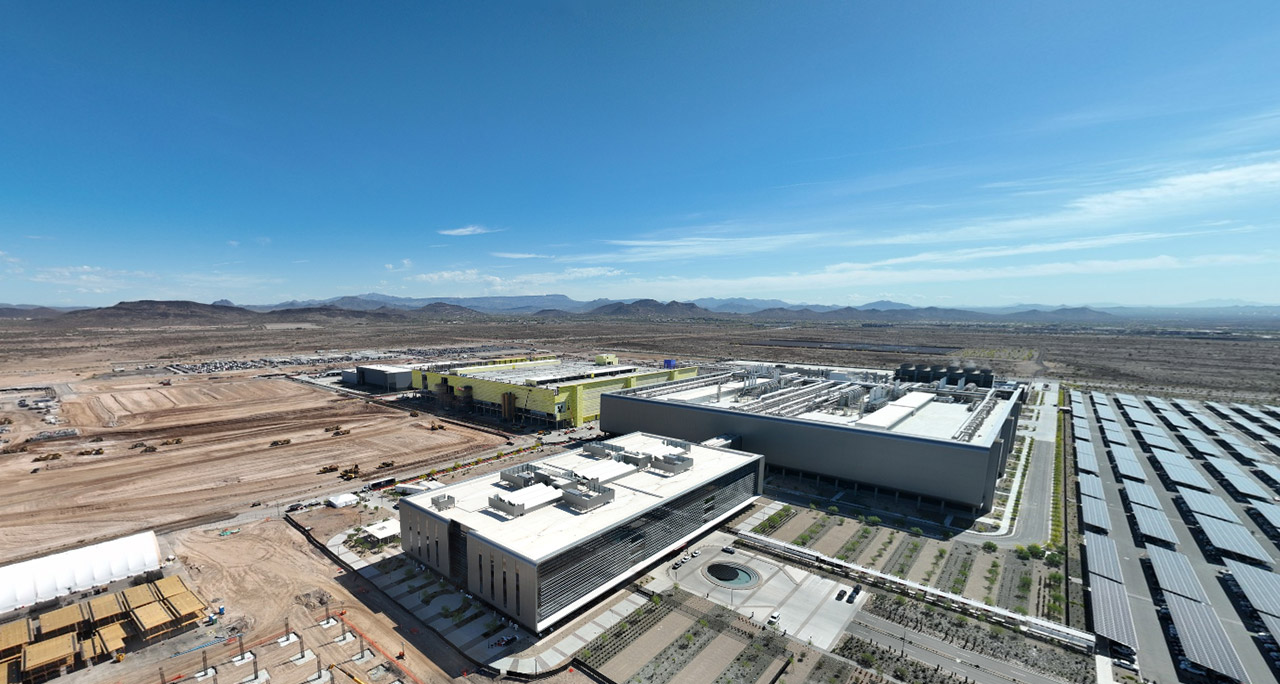
Semiconductors continue to lead the way. TSMC’s north Phoenix campus now represents a $265 billion total commitment after a $100 billion increase announced in July, and the ripple effects are pulling in suppliers, equipment makers and packaging firms including Amkor, ASML, Applied Materials and Intel. That momentum was reinforced this summer when SEMICON West, the industry’s flagship North American trade show, announced it will make Phoenix its permanent home starting in 2027 after a record-setting 2025 debut. This show is a major driver given the fact that the semiconductor industry represents roughly $1 trillion in annual revenue, that’s a lot of buying power rising in the Valley of the Sun. For multifamily and BTR investors, this translates into a durable, diversified employment base well beyond the historical construction and hospitality drivers.
A Leading Build-to-Rent Market
Phoenix’s affordability dynamics are increasingly favoring rental housing, particularly build-to-rent and single-family rental product. Realtor.com recently ranked Phoenix third nationally among metros where renting is more affordable than buying, with starter-home ownership costing nearly $1,200 more per month than renting a comparable home, according to GlobeSt. Today’s renter in Phoenix is often choosing between owning a house and renting one, not between an apartment and homeownership. That’s a dynamic that continues to support demand for professionally managed rental homes across growth corridors including Buckeye, Goodyear, Surprise, Queen Creek, Gilbert and Chandler.
Drivers of Phoenix’s BTR Segment
Phoenix’s build-to-rent growth is being driven by a mix of demand-side and market-level factors. On the demand side, renters are relocating for employment opportunities, families are seeking more space, and many residents want to experience different parts of the Valley before committing to homeownership. Single-family rentals and professionally managed BTR communities meet that need directly, offering the breathing room, privacy, yard, garage and neighborhood feel of homeownership while preserving financial flexibility. Importantly, many of these renters aren’t delaying a home purchase because they can’t qualify, they’re waiting for more certainty around interest rates, long-term employment or personal financial goals.
On the supply and investment side, Phoenix checks the boxes institutional investors and developers look for: consistent population growth, expanding employment, available suburban land, strong household formation and sustained demand for larger rental homes. But with one of the country’s largest BTR development pipelines, the market is also becoming more competitive, thus success increasingly depends on choosing the right locations, delivering the right product, and pricing homes appropriately. Long-term confidence in Phoenix remains strong, but disciplined execution now matters more than ever.
Migration and Demographics Still Favor the Valley
The Phoenix-Mesa-Chandler metro added roughly 59,000 residents between 2024 and 2025, pushing its population past 5.2 million. Notably, Phoenix also leads large Western metros in Millennial homeownership growth, with the homeowner rate climbing to 54.5% in 2023, evidence of a maturing, increasingly stable housing market even as rental demand remains strong. Phoenix continues to draw residents from higher-cost coastal markets, a fact reflected in U-Haul’s midyear migration data, which shows Arizona ranked fourth nationally for boomer in-migration and ninth for Gen X, with Phoenix landing as the number three metro destination for boomers specifically.
Source data: CoStar/Orion Properties (Aug. 18, 2026); Phoenix Business Journal; GlobeSt.com; AZ Big Media; U-Haul Midyear Migration Trends Report; Economic and Business Research Center (EBRC).