
The build-to-rent sector is entering a new phase, one defined less by growth-at-any-cost optimism and more by underwriting rigor, location precision and full-lifecycle thinking. Capital is getting more selective about which deals it will fund. Developers are zeroing in on hyper-local competition rather than riding citywide trends or the herd mentality of a popular emerging product type. Construction speed and cost have become performance levers in their own right. Home design is being driven by what residents will actually pay for, not just square footage. And the entire arc of a project, from acquiring the land to eventually selling it, is increasingly being run as one connected business rather than a series of separate steps.
For renters, investors and homebuilders alike, that shift matters: it signals a housing sector settling into a more durable, less speculative version of itself. What follows is a closer look at five forces reshaping build-to-rent, from how deals get financed and where they get built, to how they get constructed, designed, optimized and ultimately managed over the long haul.
Money Hasn’t Left the BTR Space. It’s Gotten More Selective.
One of the key elements at the top of every BTR developers’ list of priorities is capital: how institutions are investing, how construction loans are underwritten, and the persistent gap between finishing a project and filling it with renters. The conversation today is less about a shortage of interested investors and more about rising standards.
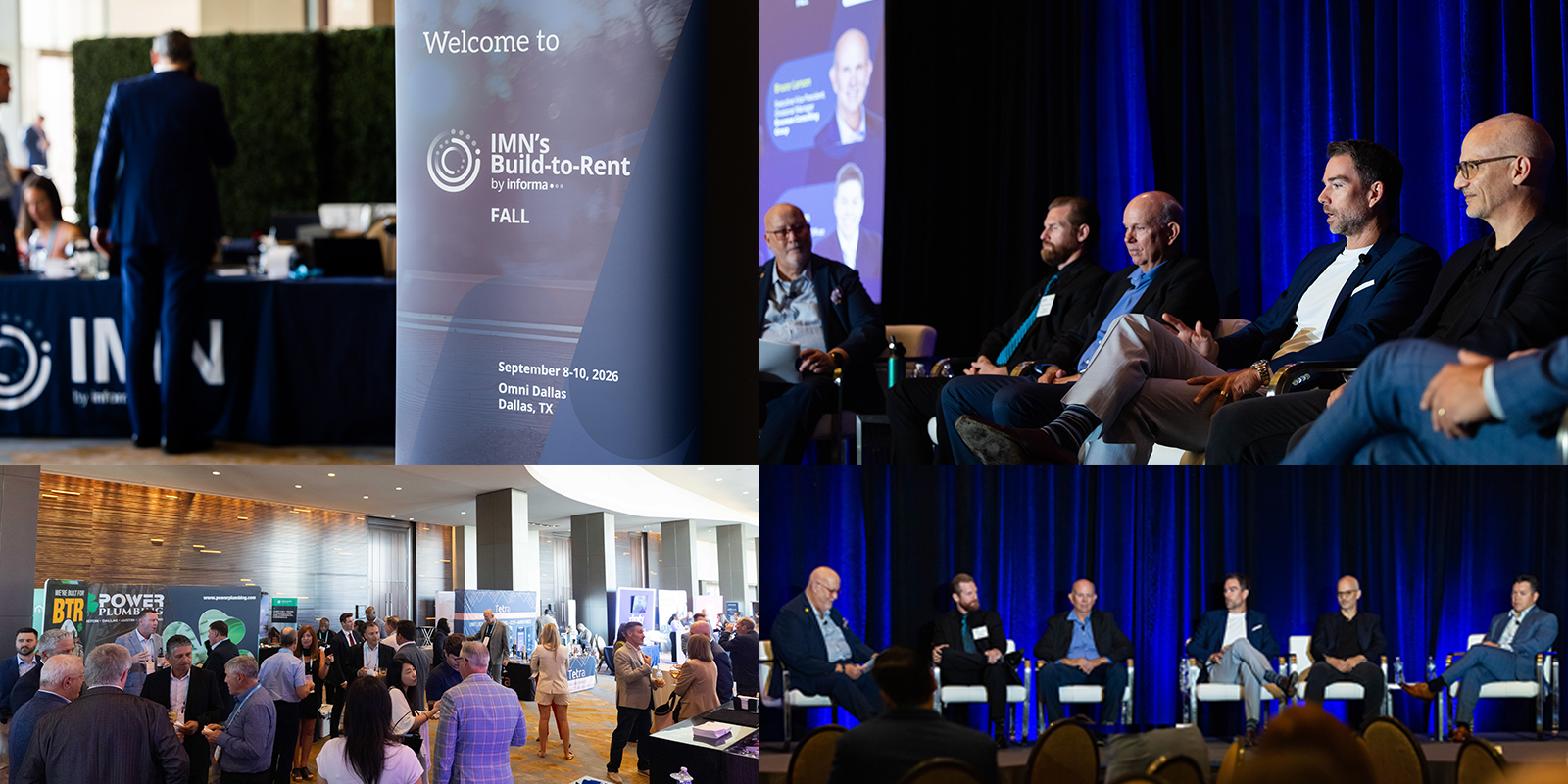
“Capital is available, but the bar for getting a project financed has moved higher,” said Porter Kyle’s Taylor Shultz, who recently shared insights about the BTR sector at IMN’s Fall Forum in Dallas. “Deals need to work with realistic rents, lease-up assumptions, resale values, contingencies and construction schedules, not assumptions that depend on everything going right.”
That shift toward realism sets the tone for the rest of the sector’s evolution. If lenders and investors are demanding a clear-eyed view of the numbers, developers are being pushed to apply that same scrutiny earlier in the process, starting with where they choose to build.
Where You Build Matters More Than Ever
BTR developers understand that a hot metro area alone is no longer enough to justify a new rental community. The focus is instead on identifying exactly where housing demand is headed next, acquiring land strategically, and underwriting deals based on the real competition nearby, not just broad population and job growth.
For developers, that means the mix of similar rental communities within a few miles of a project now carries more weight than citywide trends. Shultz notes, “the competitive pipeline within the actual trade area matters more than ever.” For example, a well-located, 100-unit neighborhood of rental homes with little direct competition in its immediate area can perform very differently than the wider market suggests, even within the same booming city.
That kind of hyper-local thinking naturally extends into how projects actually get built, not just where.
Building Faster Is Becoming Part of the Business Plan
Construction execution matters and is now an integral part of an investment thesis. Today, substantial attention is paid to how homes get built: the rise of specialized builders, factory-style and modular construction methods, and new technology, including artificial intelligence, robotics and faster digital permitting, aimed at speeding up delivery.
“Construction is no longer simply a cost line,” Shultz noted. “In this financing environment, cutting costs or shaving several months off a build schedule can materially affect a project’s bottom line, how you build has become just as important as what you build.”
That requires the entire development team, from investors, financing, owners, the general contractor and property management operator to be aligned. Doing so helps ensure a BTR community gets completed on time, on budget and per plan.
That reframing of construction as a performance driver carries directly into questions of product, namely, what developers are building, and why.
Bigger Homes Aren’t Automatically Better Homes
Pricing strategy, amenities and what renters are actually willing to pay for point to a recurring question developers must answer: what will the resident really value enough to pay extra for? Product discipline matters more today than simply building bigger homes.
Shultz points out, extra square footage that doesn’t bring in more rent can quietly eat into profits, through higher construction costs, more land used, as well as increased utilities, maintenance and taxes. “Smart, efficient floorplans,” he said, “can outperform larger homes when the added space doesn’t translate into something residents are actually willing to pay for.” The implication is a more data-driven approach to home design, guided by what renters actually want rather than assumptions about bigger being better.
From Building and Selling to Running a Business
Perhaps the clearest sign of the BTR sector’s maturity shows up in an emphasis on property management, technology, the resident experience, pricing, amenities and long-term portfolio strategy. That focus reflects a broader shift away from the traditional approach of building a community, leasing it up and selling it, toward what Shultz describes as thinking about the whole life of the investment.
Developers increasingly need to think through the entire lifecycle of a BRT community, encompassing everything from land, design, construction, lease-up, pricing, resident retention and income growth, through the ultimate decision to refinance, hold or sell. “Savvy BTR developers approach projects as one connected and optimized process now,” Shultz said, “rather than as a series of separate steps handled by different teams.”
A BTR Sector Grows Up
Taken together, the signals point in one direction: build-to-rent is no longer an industry where developers can count on a rising market to carry a project across the finish line. Investors want realistic numbers before they’ll write a check. Location decisions hinge on what’s already built nearby, not just citywide demand. Construction cost and speed now shape returns as much as design does. Home layouts are being judged by what residents will actually pay for. And the full lifecycle of a project, land, construction, leasing, operations and eventual sale, is increasingly managed as a single, connected business.
For an industry once defined by rapid expansion, that growing emphasis on discipline may be the clearest sign yet that build-to-rent housing is here to stay.