
Early on in Connect CRE’s 2025 Summer Leadership Series, we presented the views of four key industry figures on hedging strategies for the current market volatility. Unsurprisingly, the question is one that many industry leaders have considered, and here we present responses from four more. Below you’ll find insights from Daniel Friedeberg, CEO of Slatt Capital; Taylor Shultz, partner with Porter Kyle; and Keith Lampi, CEO and President of Inland Real Estate Investment Corporation.
Considering current market volatility, what proactive hedging strategies could CRE investors employ beyond simply waiting?
 Daniel Friedeberg: In today’s market, passive strategies are no longer sufficient. We encourage investors to adopt a proactive, multi-pronged approach that emphasizes capital flexibility, operational discipline, and strategic positioning.
One way to hedge is through active asset management. By controlling expenses, implementing dynamic leasing strategies, and leveraging tech-enabled efficiencies, investors can drive net operating income (NOI) growth and create a strong frontline defense against macroeconomic uncertainty. Another key element is strategic debt structuring. With volatility in interest rates and shifting credit spreads, it can be prudent to lock in fixed-rate debt, explore interest rate caps, or restructure maturing loans early to avoid refinancing under unfavorable conditions. Life companies, for example, remain active lenders even when banks and CMBS lenders pull back, often offering forward rate locks up to a year before closing. While there is a premium to absorb rate risk, this can be an effective way to mitigate refinancing exposure.
Volatility also creates dislocation, which in turn presents opportunity. Some investors are pursuing recapitalizations, loan assumptions, and distressed asset acquisitions, where they can apply both operational expertise and long-duration capital. Equally important is diversification of capital sources. By tapping a wide lender network and not relying too heavily on any one channel, investors gain critical flexibility when traditional lenders tighten terms.
Finally, we encourage the use of data-driven risk modeling. Leveraging granular market data—such as delinquency trends, maturity schedules, and property-level performance—enables investors to run stress tests and scenario analyses. This supports informed, preemptive decision-making rather than reactive responses.
Ultimately, the most durable hedge is readiness. By staying connected to real-time market intelligence and ensuring access to capital, investors can position themselves to do more than just withstand volatility but also to capitalize on it.
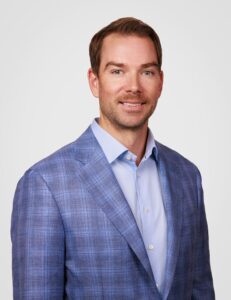 Taylor Shultz: Looking at alternative asset classes or secondary markets could be a viable alternative to sitting on the sidelines for many investors. Traditional buy / sell investors could also look to development opportunities. Many of today’s viable development opportunities offer a risk-adjusted return and will be delivered in the future, providing time for concerns like oversupply, interest rates and tariffs to work themselves out. While finding the right General Partner that aligns with your investment goals and strategies may be challenging, this strategy away from traditional buy / sell investment can be a solid alternative to traditional real estate investing.
 Keith Lampi: Volatility is a reflection of risk and uncertainty, which also creates opportunities for well-capitalized and experienced investors. At Inland, we are pursuing high-quality assets in sectors that have less correlation to overall economic growth like healthcare, senior housing, multifamily, self-storage and student housing. Further hedging volatility, we believe in utilizing a long-term investment horizon and capitalizing deals with long-term, fixed-rate debt at moderate leverage points, or with no leverage at all.
Source: https://www.connectcre.com/leadership_story/industry-leaders-advocate-proactive-hedging-strategies/
Connect CRE