
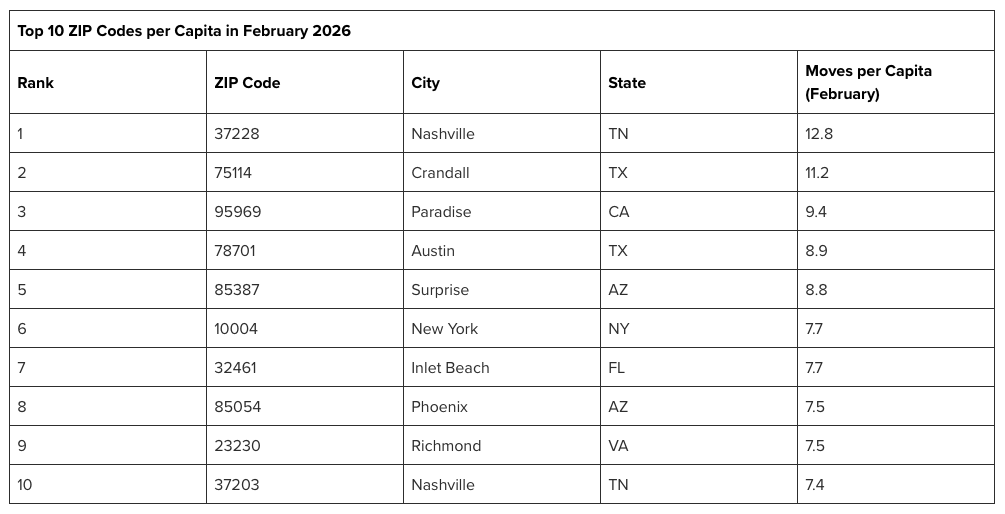
Source: AZBigMedia
The Phoenix housing market continues to evolve in ways that reflect both national pressures and uniquely local dynamics. From shifting investor behavior to changing renter demographics, the latest data paints a picture of a market that’s still growing—but doing so more thoughtfully than in the frenzied years of the early 2020s.
One of the clearest signals of continued momentum comes from the rental side. Multifamily development saw a notable bump to start the year, with new construction activity jumping in January. That surge suggests developers remain confident in long-term demand, even as rent growth moderates. In a market like Phoenix—where population growth has been a defining trend—this continued pipeline is less about speculation and more about keeping up.
And that population growth is changing shape. Some Phoenix ZIP codes are seeing a surge in Gen Z residents, while others are aging more quickly. This generational reshuffling matters: younger renters tend to prioritize flexibility, affordability and proximity to amenities, which in turn influences where developers and investors are placing their bets. Neighborhoods that offer a mix of lifestyle and value are increasingly becoming magnets for this cohort, reinforcing demand for well-located multifamily product.
At the same time, affordability remains a central theme. Two West Valley cities — Goodyear No. 2, Peoria No. 17, recently landed among the fastest-growing and most affordable in the U.S., underscoring a broader shift toward suburban migration. As home prices in core areas remain elevated, renters and buyers alike are pushing outward in search of attainable options. This trend isn’t unique to Phoenix, but it’s particularly pronounced here given the region’s ability to expand geographically.
Migration trends continue to reinforce that demand story. Two Arizona ZIP codes ranked among the hottest in the country for inbound movers, a reminder that Phoenix is still firmly on the radar for households relocating from higher-cost markets like California. Surprise ZIP 85387 was ranked No. 5 nationally and Phoenix ZIP 85054 ranked No. 8 nationally. Both areas are part of the broader Phoenix metro and reflect two key migration trends:
Surprise is attracting movers with newer, more affordable master-planned communities on the metro’s edge. And North Phoenix —especially the Desert Ridge area—is drawing higher-income relocators and benefiting from job growth and corporate expansion nearby. Even with higher interest rates and a more cautious economic outlook, people are still arriving—and they need places to live.
But while demand drivers remain intact, the capital behind housing is shifting. Large institutional investors have begun pulling back from the for-sale housing market, exiting positions even ahead of potential regulatory changes. This retreat reflects a combination of factors: tighter margins, political uncertainty and a reassessment of risk after several years of aggressive acquisition activity. For Phoenix, where institutional capital has played a major role in recent housing cycles, this could open the door for smaller investors and individual buyers to re-enter the market.
Based on John Burns Research and Consulting’s March 2026 BTR Housing Brief The US housing market remains significantly undersupplied, with JBREC projecting demand for 1.16 to 1.34 million new homes annually through 2035. Build-to-rent communities are increasingly recognized as a meaningful part of the solution — and a growing body of resident data is filling in a more nuanced picture of who lives there and why.
BTR is no longer a niche product serving a narrow demographic. Surveying more than 7,600 residents across the country, JBREC found that nearly half (47%) report annual household incomes of $100,000 or more, and the resident base spans all life stages, from young singles to mature families. More than a third (36%) say they actively prefer renting, up from 27% the year prior, with that preference rising sharply among older residents: nearly half of Mature Singles and Couples (46%) choose to rent by choice, not circumstance.
The top reasons residents prefer renting? Freedom from maintenance responsibilities (56%), avoiding the financial burden of ownership (37%), and flexibility to relocate (37%). And community satisfaction continues to remain strong for BTRs. Residents consistently cite safety, professional management, low-maintenance living, and access to quality schools and amenities as standout features.
The build-to-rent sector, once one of the hottest segments in the Sun Belt, is also showing signs of cooling. According to recent industry data, conditions for single-family rental construction have weakened, with developers facing higher financing costs and softer rent growth projections. That doesn’t mean the model is going away—far from it—but it does suggest a more measured pace of expansion moving forward.
Still, Phoenix’s appeal goes beyond pure economics. Lifestyle continues to be a major draw, and that’s reflected in rankings of the city’s “friendliest” neighborhoods. Areas that foster a sense of community—whether through walkability, local businesses or neighborhood character—are increasingly valuable in a market where renters and buyers have more choices than they did just a few years ago.
Taken together, these trends point to a housing market that is stabilizing rather than slowing. Demand is still there, fueled by job growth, migration and demographic shifts, but the easy growth phase has passed. Developers are being more selective. Investors are recalibrating. And residents are making more deliberate decisions about where—and how—they want to live.
For owners, investors and operators, the takeaway is clear: Phoenix remains a fundamentally strong market, but success now depends on precision. Understanding submarket dynamics, aligning product with evolving renter preferences and navigating a more complex capital environment will be key.
In other words, the story in Phoenix isn’t about whether the market is growing—it’s about how intelligently that growth is being managed.