
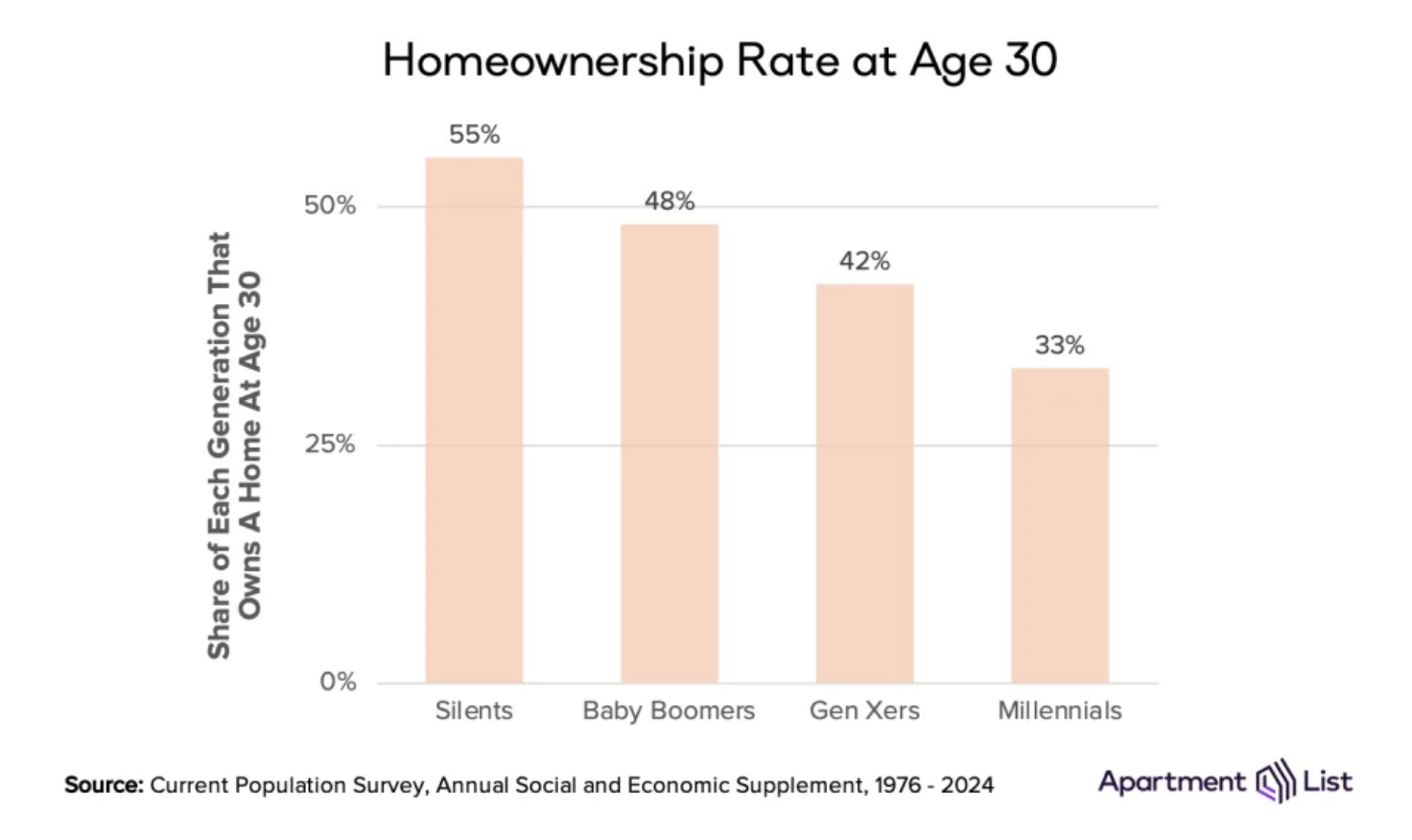
The American dream isn’t dead—it’s just being redefined. As affordability challenges grow and life paths shift, more people are choosing to rent for longer, and in many cases, permanently. For multifamily owners and developers, this represents more than a cyclical shift—it’s a structural opportunity.
Recent data and industry insights paint a compelling picture: renting is no longer simply a transitional phase, but increasingly a long-term, lifestyle-driven choice. Here’s why that’s good news for the multifamily sector.
- Affordability Gaps Are Making Renting the Pragmatic Choice
Homeownership is increasingly out of reach for the average household. Housing affordability now lags historical norms across most U.S. markets. A household earning the median income can now afford only 37% of homes for sale, down from around 50% just a few years ago. And in high-demand metros, the barrier to entry is even higher.
As mortgage rates hover near multi-decade highs and home prices remain elevated, more consumers—especially Millennials and Gen Z—are reevaluating the costs and risks of ownership. Renting, by contrast, offers cost predictability, flexibility, and often access to better locations and amenities than similarly priced homes for sale.
For multifamily developers, this reinforces the value of well-located, quality rental communities that provide lifestyle benefits without the burdens of ownership. Residents aren’t just renting because they have to—they’re renting because it works.
- Renters Are Staying Longer—By Choice and Necessity
The narrative that renters are just waiting to buy is no longer universally true. Reports indicate that a growing segment of renters—more than 40%—plan to remain in rental housing for at least the next five years. Some anticipate renting indefinitely.
What’s driving this? Lifestyle freedom, job mobility, and an aversion to the debt and maintenance responsibilities that come with homeownership. Renters are increasingly prioritizing convenience, flexibility, and access to urban or amenity-rich environments.
This shift is already influencing how multifamily communities are being designed and operated. From upgraded fitness centers and co-working lounges to smart home features and flexible lease terms, successful operators are responding to the evolving expectations of long-term renters.
Retention is the new acquisition strategy. Building communities that tenants want to stay in—year after year—will be key to maximizing NOI and long-term asset value.
- Life Milestones Are Changing—and So Is Housing Demand
Traditional markers like marriage and children—once the top triggers for buying a home—are being delayed, redefined, or bypassed altogether. Research from John Burns Research & Consulting notes that in 1980, over 60% of adults aged 25–34 were married. Today, it’s under 40%. Birth rates have similarly declined.
This cultural shift has ripple effects across the housing market. More individuals are choosing to live alone, cohabit without marriage, or delay buying until their late 30s or beyond. These life patterns naturally support the multifamily rental model, which offers scalable solutions for a wide variety of household types.
For developers, this underscores the importance of unit mix flexibility, from efficient studios for young professionals to larger floorplans for roommates or families who rent by choice. Adaptive design will be essential in capturing the next generation of renters.
Multifamily’s Moment: Long-Term Tailwinds Ahead
The combined impact of affordability constraints, renter retention, and lifestyle-driven decisions signals that multifamily is not just a temporary beneficiary of housing market volatility—it’s at the center of where consumer demand is going.
Developers and owners who lean into this renter-first reality—by creating compelling living experiences, investing in long-term community value, and adapting to shifting life choices—stand to thrive.
The future of housing is flexible, accessible, and increasingly rental. And multifamily is ready to meet the moment.