
Something fundamental is shifting in how Americans think about housing. The white picket fence and 30-year mortgage that defined success for previous generations are giving way to a new reality—one where renting isn’t just a temporary stop on the way to homeownership, but an intentional lifestyle choice. And nowhere is this trend more visible than right here in the Phoenix metro area.
The Renter-by-Choice Revolution
The numbers tell a compelling story. According to Apartment List’s recent survey of 1,000 Gen Z and millennials, an overwhelming 86% report delaying major life milestones due to housing costs, with 43% specifically citing the postponement of buying a home. But here’s what’s surprising: many of these renters aren’t simply waiting for the market to improve. They’re actively choosing to rent, even when they have the means to buy.
In metro Phoenix, this trend is playing out in real time. Professional athletes, tech workers, empty nesters, and young families are all discovering that luxury rental living offers something traditional homeownership doesn’t: flexibility, convenience, and often, significant cost savings.
The financial math is increasingly favoring renters. U.S. homeowners with a mortgage now pay 37% more per month than renters, according to LendingTree data. In Gilbert, for example, where the average home price hovers around $600,000, a mortgage with current rates and a 20% down payment runs nearly $3,500 monthly—while comparable rental homes can be found for under $3,000, without the HOA fees, yard maintenance, or replacement costs that come with ownership.
What’s Driving the Shift
Several forces are converging to reshape housing preferences. First, there’s the affordability challenge. Nearly half of millennial and Gen Z renters say they can’t save at all, with one in four spending more than half their income on rent. Yet paradoxically, 57% haven’t saved enough for a down payment, even though 87% still view homeownership as a goal.
But economics alone don’t tell the whole story. COVID fundamentally altered how younger generations think about life priorities. They simply are not following a regular pattern of getting married and having children. That is leading to decisions not to own a home they are tied down to maintaining. That allows them the flexibility of traveling or changing jobs.
A long-held stigma associated with renting is dissipating. Renters are no longer seen as second-class citizens but as savvy consumers making intentional choices about how they want to live. Only about 33% of 30-year-olds own a home in the U.S. today, down from 47% in the mid-1980s, according to John Burns Research & Consulting.
Homeownership used to be one of the main ways to build wealth. That’s no longer the case as new options emerge. Perhaps most telling: about 65% of Gen Z and millennials say gambling and cryptocurrency are their top investment choices, according to a Harris Poll.
Where Renters-by-Choice Are Living in Metro Phoenix
Location matters enormously to today’s renters, and developers are responding by building in the Valley’s most desirable areas – communities where people actively want to live.
North Phoenix and north Scottsdale are seeing significant luxury rental development, with communities offering resort-style amenities that rival high-end resort living. Glendale is attracting young families who prioritize proximity to shopping and restaurants. Gilbert appeals to professionals seeking newer, well-maintained homes in excellent school districts. South Phoenix is emerging with new build-to-rent communities.
The demand is driving construction. Almost 90% of Valley apartments built in 2025 were lifestyle developments—rentals designed for tenants with the money to buy but who choose to rent. And 85% of Phoenix-area apartments planned for the next few years target this same demographic.
How Build-to-Rent Appeals to This Market
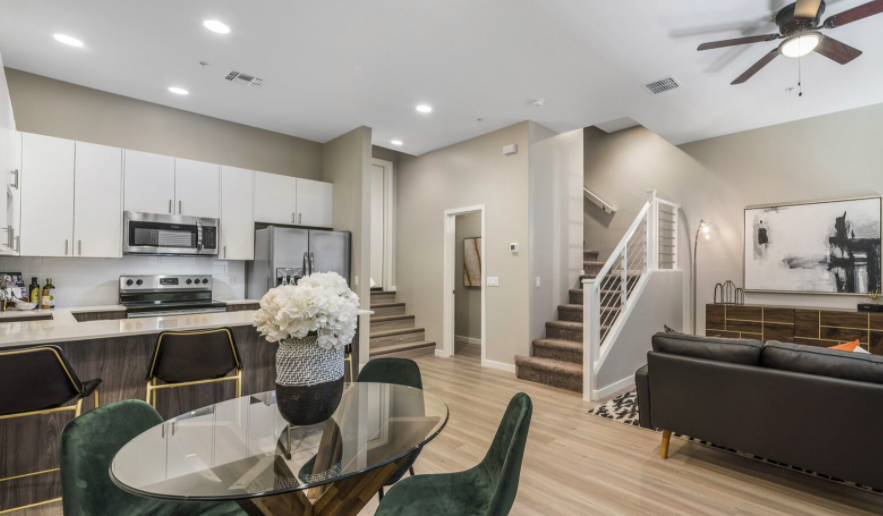
Build-to-rent communities are perfectly positioned to serve the renter-by-choice demographic. There are now more than 20,000 BTR homes across the Valley with thousands more planned, according to homebuilding estimates. These aren’t converted older homes or traditional apartment complexes—they’re purpose-built rental communities designed specifically for how people want to live today.
What makes BTR so appealing? According to Apartment List research, in-unit laundry (44%), pet-friendly policies (43%), and central AC (43%) top renters’ lists of non-negotiables. BTR communities deliver all three, plus features that traditional apartments can’t match: private garages, dedicated outdoor spaces, and multi-level layouts that feel like true homes.
Nationally, the single-family rental sector is experiencing a structural shift. According to joint research from Arbor Realty Trust and Chandan Economics, SFR households grew 1.7% in 2025 to 14.6 million, marking a seven-year high. Much of this growth comes from attached, purpose-built rentals. In 2024 alone, attached SFR properties jumped 4.3%, accounting for 91% of the sector’s total expansion.
Build-to-rent construction now represents more than 7% of all single-family development, up from just 2.3% between 1975 and 2013. The model is proving durable because it addresses a fundamental market need: quality rental housing for people who could buy but deliberately choose not to.
With more than 100 million potential renters-by-choice nationwide between millennials and empty nesters, the BTR sector isn’t experiencing a temporary trend—it’s meeting the sustained demand of a generation redefining what home means.