
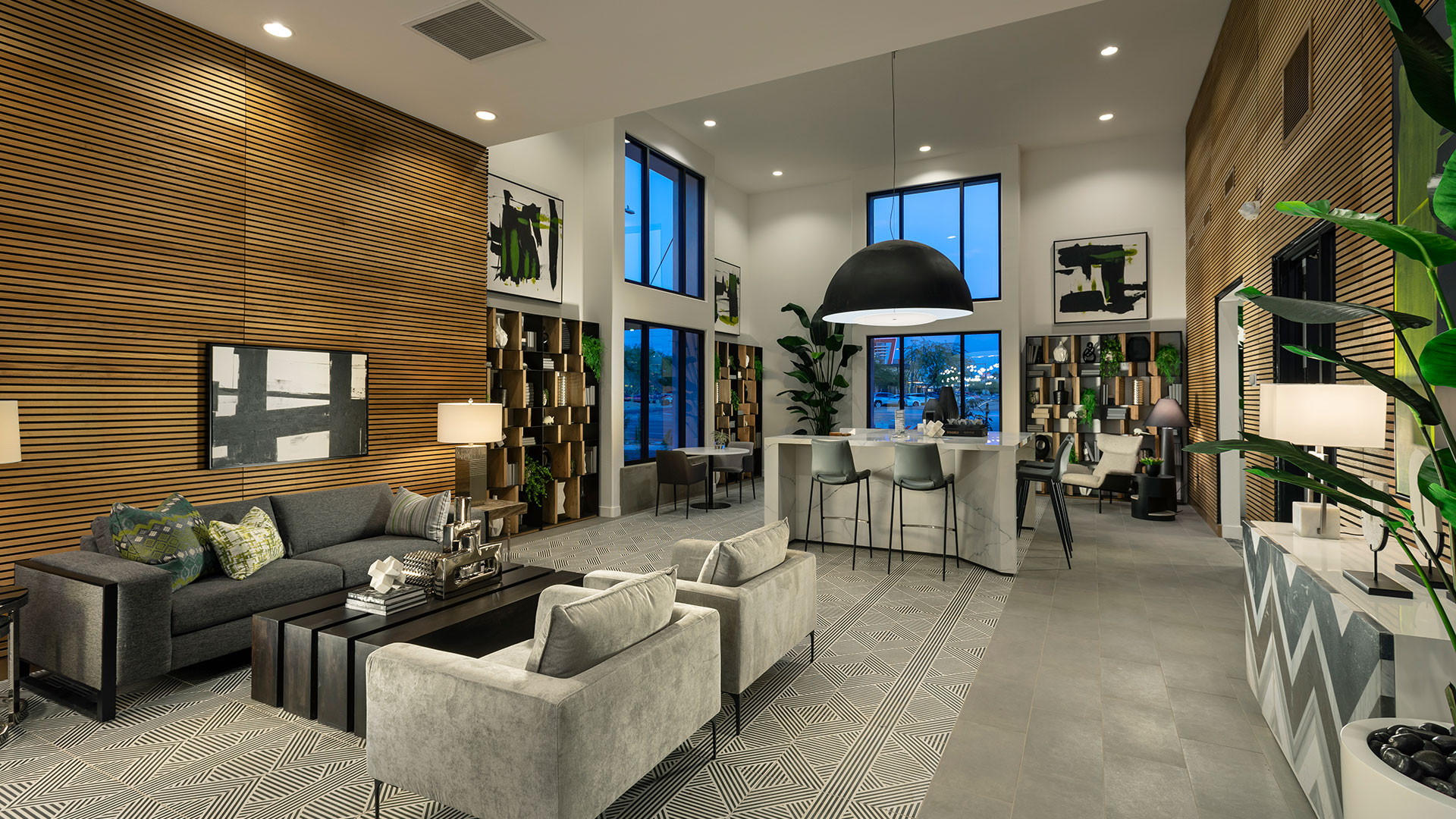
A new wave of wealth and a shifting affordability landscape are reshaping the housing market in Greater Phoenix — and redefining what “home” means for both affluent and aspiring residents.
Between 2019 and 2023, the number of millionaire renters in Greater Phoenix rose by 519%, making it the fastest-growing millionaire hub in the U.S. Renting, once viewed as a temporary bridge to ownership, has evolved into a preferred lifestyle for a growing segment of high-income individuals. At the same time, national data shows that traditional homeownership has become increasingly out of reach for millions of renters, driving long-term demand for multifamily housing across markets.
A Tale of Two Trends: Affluence and Affordability
CBRE’s recent report, “Fewer Renter Households Can Afford Homeownership,” found that 1.8 million renter households nationwide can no longer afford median-priced homes in their markets. High mortgage rates, steeply rising home prices, and elevated property taxes have combined to make buying a home far less attainable.
In many markets, the cost premium of buying versus renting has surged dramatically. In Orange County California, the monthly cost of ownership now carries a 303% premium over average rent — nearly double the gap seen in 2019. Similar jumps have occurred in Austin and Los Angeles, while even typically resilient markets like Boston and Washington, D.C. show major affordability constraints.
Sunbelt metros, including Phoenix, have also felt the pressure from rapid population growth during the COVID-era migration boom. Yet that same influx has created fertile ground for a new category of luxury multifamily development — one that caters not to necessity, but to choice.
The Rise of the Millionaire Renter
Affluent newcomers — from tech founders and entrepreneurs to mobile executives — increasingly view renting as a strategic lifestyle decision. The appeal lies in flexibility, convenience, and experience, rather than square footage alone.
“Lock-and-leave” communities have emerged in Phoenix and they epitomize this shift. Offering 24/7 concierge service, curated amenities, and boutique-scale privacy, properties now blur the line between ownership and hospitality. Residents gain peace of mind knowing their homes are cared for while they focus on business, travel, or leisure.
This mindset represents a broader redefinition of luxury — one that prizes time, simplicity, and freedom from the burdens of ownership. As one developer noted, “Affluent renters aren’t compromising; they’re optimizing.”
Why Flexibility is the New Status Symbol
Rising interest rates and market volatility have made even the wealthy more cautious about tying up capital in property. Leasing provides agility in a fast-moving economy, allowing renters to adapt to new career opportunities, global travel, or life transitions without the friction of buying and selling real estate.
Meanwhile, the experience economy continues to influence housing expectations. Renters are drawn to spaces that offer connection and community — not just luxury finishes. Properties that include event spaces, lounges, private dining rooms, and wellness amenities are setting new benchmarks for what premium living looks like.
Today’s properties often combine high-end design with social and service-oriented amenities that make daily life easier. From concierge planning to home care, luxury leasing today often feels more like a membership experience than a typical lease agreement.
Affordability Challenges Fuel Multifamily Demand
While affluent renters are driving growth at the top end of the market, affordability constraints are expanding the renter pool more broadly. CBRE forecasts that multifamily occupancy rates will remain above historical averages in the years ahead, with continued upward pressure on rents as supply and demand rebalance.
For developers and investors, that means opportunity across multiple segments. Luxury leasing addresses the preferences of high-income earners, while conventional multifamily continues to serve a widening group priced out of ownership.
As hybrid work, mobility, and lifestyle priorities evolve, the lines between these groups are blurring. A growing number of residents — not just the wealthy — are choosing renting for its ease, flexibility, and financial predictability.
Phoenix: Ground Zero for the New Rental Economy
Nowhere are these dual forces more visible than in Greater Phoenix, where a booming job market, corporate relocations, and demographic inflows are reshaping housing demand. With an expanding base of high-income renters and an affordability gap that limits homeownership, the metro stands at the forefront of a national real estate shift.
This environment underscores the importance of thoughtful design, service-driven development, and a focus on community. Luxury leasing is no longer an afterthought — it’s a strategic response to how today’s residents define value and belonging.
The message is clear: renting has become the new luxury, and in Phoenix, that trend isn’t slowing down anytime soon.